

How Hydro Jetting and Sewer Line Descaling Fix Underground Pipe Problems?
Recurring sewer backups, slow drains, foul odors, and reduced flow almost always point to buildup inside the pipe. Grease, sludge, mineral deposits, rust scale, tree roots, and corrosion can narrow an underground line over time until normal flow becomes impossible. The good news is that most of these problems are removable. When underground plumbing repair involves buildup rather than structural damage, hydro jetting and descaling clear the line and restore capacity. The important limit is this: neither method repairs a collapsed pipe, a severe crack, a failed joint, or major structural corrosion.
Hydro Jetting vs. Sewer Descaling at a Glance
The right method depends on camera findings, pipe material, age, layout, access, and the actual cause of the blockage, but not simply how severe the backup seems.
| Method | How It Works | Best For | Does Not Fix |
| Hydro jetting | High-pressure water through a specialty nozzle | Grease, sludge, biofilm, soft deposits, roots, some loose scale | Collapsed pipe, major cracks, broken joints, poor slope |
| Hydraulic descaling | Targeted high-pressure nozzles to break and flush scale | Mineral deposits and moderate internal buildup | Structural pipe loss or heavily bonded scale in failing pipe |
| Mechanical descaling | Flexible cable with chain knockers, cutters, or brushes | Hardened scale, rust tuberculation, cast-iron corrosion buildup | Missing pipe wall, collapse, severe offsets, major fractures |
| Pipe lining or replacement | Restores or replaces a structurally damaged pipe | Cracks, corrosion loss, failed joints, collapse | Not a cleaning method |
What Causes Underground Sewer Pipes to Clog or Narrow
Several different types of buildup produce the same symptoms: slow drains, gurgling, recurring backups, and reduced flow. Understanding what is actually in the pipe determines which removal method applies.
Grease, Soap, and Food Sludge
Fats, oils, grease, soap residue, food particles, and paper buildup can coat pipe walls over time and catch more debris as material passes through. In residential lines, this tends to accumulate gradually. In commercial kitchen lines, the buildup can become severe within months if the line is not maintained regularly.
Tree Roots
Roots enter sewer pipes through existing joints, cracks, offsets, and defective connections. Once inside, they grow and branch out, eventually creating a mass that traps debris and causes repeated blockages. Root removal clears the line temporarily, but it does not close the defect that allowed the roots to enter. As a result, a root problem usually signals a pipe condition that cleaning alone cannot cure.
Mineral Scale and Rust
Hard water minerals, corrosion products, and rust tuberculation accumulate on the interior walls of older metal pipes, gradually reducing the pipe’s internal diameter. Cast-iron drain lines are particularly susceptible. Over time, the interior surface becomes rough, flaky, and narrowed to the point where even moderate flow causes backups.
Pipe Damage
Cracks, bellies, offsets, broken joints, and pipe collapse can trap debris repeatedly regardless of how well the pipe is maintained. When a camera inspection reveals structural damage alongside buildup, repair planning should follow the cleaning work. Cleaning without repairing the underlying structure produces only a temporary improvement.
Camera Inspection Before Any Cleaning
Sending high-pressure water or mechanical tools into an unknown pipe is how existing damage gets worse. A camera inspection before cleaning is the step that makes everything else safer and more effective.
What the Camera Reveals
A CCTV camera pushed through a cleanout or access point shows:
- The location and type of obstruction
- Pipe material, diameter, and joint condition
- Root intrusion, cracks, offsets, and standing water
- Whether hydro jetting pressure or mechanical tools are appropriate for the pipe’s current condition
Locating and Mapping the Pipe
Beyond identifying the obstruction, the inspection documents the pipe route, depth, cleanout access points, branch connections, and the downstream connection point. This information becomes essential if repair, lining, or replacement is needed after cleaning.
Why the Inspection Cannot Be Skipped
High-pressure jetting or aggressive mechanical tools can worsen an already compromised pipe. A camera inspection confirms the pipe can tolerate the planned cleaning method. Whenever practical, a second camera pass after the work confirms what was actually removed and what condition the pipe is in.
How Hydro Jetting Works
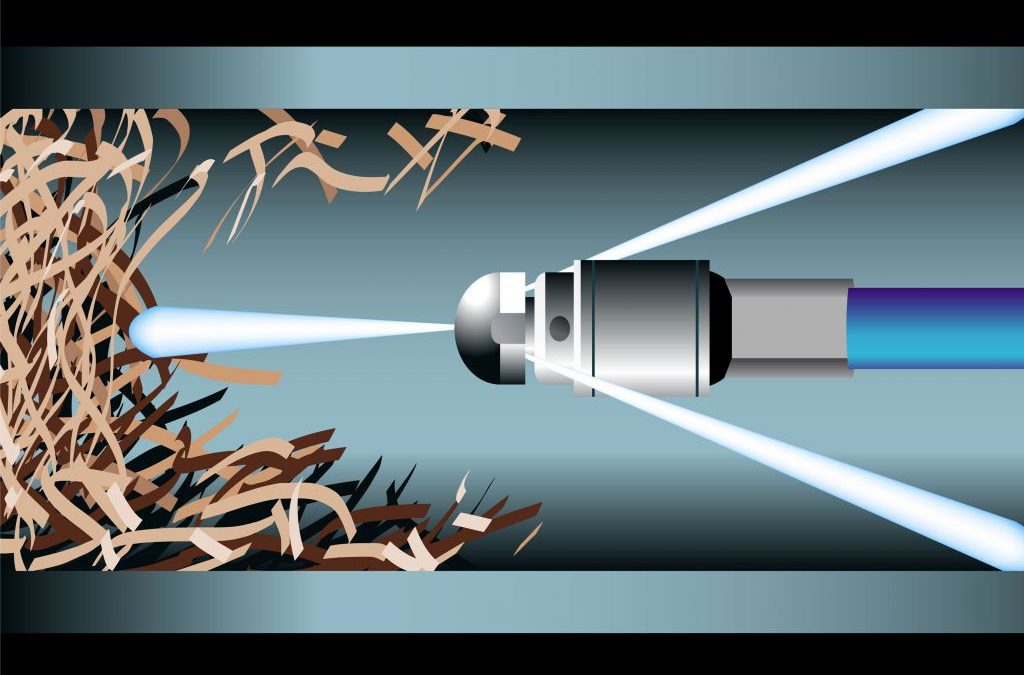
Hydro jetting uses a pump, high-pressure hose, and a specialized nozzle inserted through a suitable cleanout. The nozzle design is critical: forward jets penetrate a blockage while rear jets propel the hose through the pipe and scour the wall behind it.
The Cleaning Process
The technician confirms safe access and pipe condition before starting. From there, the sequence is:
- Select the nozzle and pressure setting based on the blockage type and pipe material
- Feed the hose through the line in controlled passes
- Use the jets to break up buildup and carry debris downstream
- Flush the line fully and perform final verification
What Hydro Jetting Removes
Hydro jetting cleans the full pipe wall rather than simply punching an opening through a clog. It effectively removes:
- Grease, sludge, soap scum, and food residue
- Biofilm and paper buildup
- Loose mineral deposits
- Some root masses where pressure and pipe condition allow
Where a cable snake only creates a path through a blockage, hydro jetting restores most of the pipe’s original interior diameter by removing material from the walls.
How Sewer Line Descaling Works
Descaling targets what hydro jetting cannot fully remove: hardened mineral deposits, rust scale, and corrosion buildup that has bonded to the pipe wall over years of accumulation.
Hydraulic Descaling
Specialized high-pressure nozzles are configured to scour scale and flush loosened debris downstream. This approach is appropriate for moderate deposits where the pipe remains structurally sound, and the buildup has not yet fully bonded to the wall.
Mechanical Descaling
A flexible shaft fitted with chain knockers, cutters, brushes, or other attachments physically breaks hardened scale away from the pipe wall. The loosened material is then flushed out or removed, followed by a camera pass to confirm the result.
Mechanical descaling requires careful tool selection. Aggressive cleaning on a pipe with heavy corrosion or thin walls can reveal or worsen existing deterioration that the scale was concealing. This is one reason camera inspection before and after matters so much for underground plumbing repair work on older lines.
Why Descaling Often Follows Hydro Jetting
In many situations, hydro jetting runs first to clear soft debris and improve access through the line. Mechanical descaling then addresses the harder deposits the water pressure could not dislodge. The order depends on the camera findings, pipe condition, and the contractor’s documented work plan for the specific job.
Choosing the Right Method
A camera inspection is what makes this decision reliable. Without knowing what is actually in the pipe and what condition the pipe wall is in, choosing a cleaning method is guesswork.
Choose Hydro Jetting When
- Grease, sludge, soft buildup, or organic material is coating a structurally sound line.
- A previous snake cable opened the line temporarily but did not remove wall buildup.
- The camera inspection confirms the pipe can tolerate the planned pressure.
Choose Descaling When
- Hard mineral scale, rust tuberculation, or corrosion deposits have narrowed the pipe’s interior.
- The pipe is structurally intact enough for cleaning but needs its diameter restored.
- Camera footage shows scaling rather than primarily grease or root blockage.
Choose Repair, Lining, or Replacement When
- The pipe is collapsed, cracked, severely corroded, offset, bellied, or missing significant wall material.
- Problems recur because the pipe’s structure is the cause.
- Cleaning can improve flow temporarily but cannot address the underlying failure.
Cleaning is diagnostic and restorative. Structural problems require structural solutions.
Is Hydro Jetting or Descaling Safe for Older Pipes?
Safety depends on the actual condition of the pipe, and not simply its age. Older does not automatically mean fragile, and newer does not automatically mean suitable for high pressure.
Pipe materials and situations that require additional assessment before cleaning include:
- Cast iron with advanced corrosion or missing wall sections
- Clay or Orangeburg pipe with cracks, offsets, or deteriorated joints
- Galvanized pipe with heavy tuberculation or thin remaining wall
- PVC with existing damage from root intrusion or physical impact
- Any line with prior repairs, unknown materials, or unstable sections
A qualified contractor adjusts pressure, tool selection, and method based on what the camera shows. In some cases, the inspection reveals that lining, spot repair, or full replacement is a safer path than aggressive cleaning. Attempting to clear a compromised pipe with DIY pressure-washing equipment or improvised tools carries a real risk of causing a collapse or fracture that turns a cleaning job into an emergency excavation.
Questions to Ask Before Hiring a Contractor
Before authorizing hydro jetting or descaling work, these questions help confirm the contractor is approaching the job correctly:
- Will you perform a camera inspection before and after cleaning?
- What material and condition is my sewer pipe in?
- Is the main problem grease, roots, mineral scale, or structural damage?
- Why is the method you recommended the safest choice for this pipe?
- What pressure range, nozzle, or mechanical tool will you use, and why?
- What risks did you identify before cleaning?
- Will this work address only the roots, or also the defect allowing roots to enter?
- What damage could be revealed once buildup is removed?
- Does the quote include final camera footage, written findings, and repair recommendations?
FAQs
What is the difference between hydro jetting and sewer descaling?
Hydro jetting uses high-pressure water to clear grease, sludge, and soft deposits from a sewer line. Descaling removes hardened mineral deposits and rust buildup using specialized nozzles or mechanical tools. The two methods are often used in sequence.
Can hydro jetting remove hard mineral scale?
Partially, yes. Hydro jetting can dislodge loose scale and some moderate deposits, but heavily bonded mineral or rust scale typically requires hydraulic or mechanical descaling tools to break it away from the pipe wall effectively.
Is mechanical descaling better for cast-iron sewer pipes?
Often, yes. For cast iron with significant rust tuberculation or hardened scale, mechanical descaling is often the more effective approach. However, a camera inspection must confirm the pipe has enough structural integrity to tolerate the tool before work begins.
Final Thoughts
Hydro jetting and descaling restore underground pipe flow not by patching what has broken down in the structure but by removing what has built up on the walls. Knowing which problem you actually have, grease buildup versus pipe collapse, is what determines whether cleaning solves it or whether underground plumbing repair means something more involved.
When a line keeps backing up despite repeated cable clearing, the pipe is usually telling you the problem is structural. BFMD Plumbing, LLC handles hydro jetting, sewer descaling, camera inspection, and full sewer repair, diagnosing the actual cause before recommending any method. Every job is quoted upfront with transparent pricing, so there are no surprises once work begins. For residential and commercial properties across the Baltimore Metro Area, the team is available for scheduled service and emergencies alike.
