Backyard Retaining Wall Options Compared for Slope and Erosion Control
A sloped yard can look charming from a distance, then turn into a muddy argument every time rain hits hard. The right retaining wall options can turn that awkward grade into usable ground, safer paths, cleaner planting beds, and better water control without making the backyard feel like a construction site. For many U.S. homeowners, the real challenge is not choosing the strongest wall on paper. It is choosing the wall that fits the soil, slope, budget, drainage pattern, climate, and the way the yard is actually used.
That is where smart planning matters. A short wall beside a patio in Arizona has different demands than a taller wall behind a walkout basement in Pennsylvania. Local frost depth, clay soil, heavy storms, tree roots, and neighborhood rules can all change the answer. If you are comparing ideas while planning a larger outdoor upgrade, trusted home improvement publishing resources can help you think beyond looks and focus on long-term value. A retaining wall is not only a backyard feature. Done right, it becomes the quiet structure that keeps the whole space working.
Retaining Wall Options That Match the Shape of Your Yard
A backyard slope is never one single problem. It may be a water problem, a soil problem, a layout problem, or all three at once. The smartest wall choice starts with reading the yard before falling in love with a material. A wall that looks perfect in a catalog can fail early if it fights the grade instead of working with it.
How slope stabilization changes the wall decision
Steep ground asks for more than a decorative border. Slope stabilization means holding soil in place while giving water a safe route out, and that changes the way you judge every material. A low garden wall beside a flower bed may only need compacted gravel and proper base prep. A wall holding back several feet of earth near a deck needs a different level of planning.
American yards vary wildly by region. In Georgia, red clay can stay heavy after rain and push hard against a wall. In Colorado, freeze-thaw movement can shift poorly built block rows. In parts of California, hillside lots may need engineered plans before a homeowner even chooses the final finish. The wall has to respect the land first.
The counterintuitive truth is that a stronger-looking wall is not always the better wall. A massive solid face with poor drainage can trap water and build pressure. A more modest system with gravel backfill, weep paths, and compacted layers may outlast it because it gives water somewhere to go.
Why yard drainage matters before the first block is set
Water decides the future of most backyard walls. Yard drainage should be planned before you compare stone, concrete, timber, or block because trapped water turns soil into a load the wall was never meant to carry. That pressure often shows up later as bulging, leaning, cracking, or soil washing out around the ends.
A practical example is a suburban home in Ohio where a patio sits below a sloped lawn. If the wall blocks runoff without a drain pipe, the patio may stay wet after every storm. If the design sends water behind the wall into clean gravel and out through a safe outlet, the same wall can protect both the patio and the soil behind it.
Good drainage rarely looks exciting when the project is finished. You may never notice the perforated pipe, filter fabric, compacted gravel, or outlet. That is the point. The best drainage work disappears because it prevents the ugly signs homeowners usually notice too late.
Comparing Materials for Strength, Cost, and Backyard Style
Material choice gets most of the attention because it is what you see every day. Still, the visible face is only half the story. Each wall type carries its own limits, strengths, maintenance habits, and design personality. The right choice feels natural in the yard and behaves well behind the scenes.
Segmental block walls for clean lines and flexible layouts
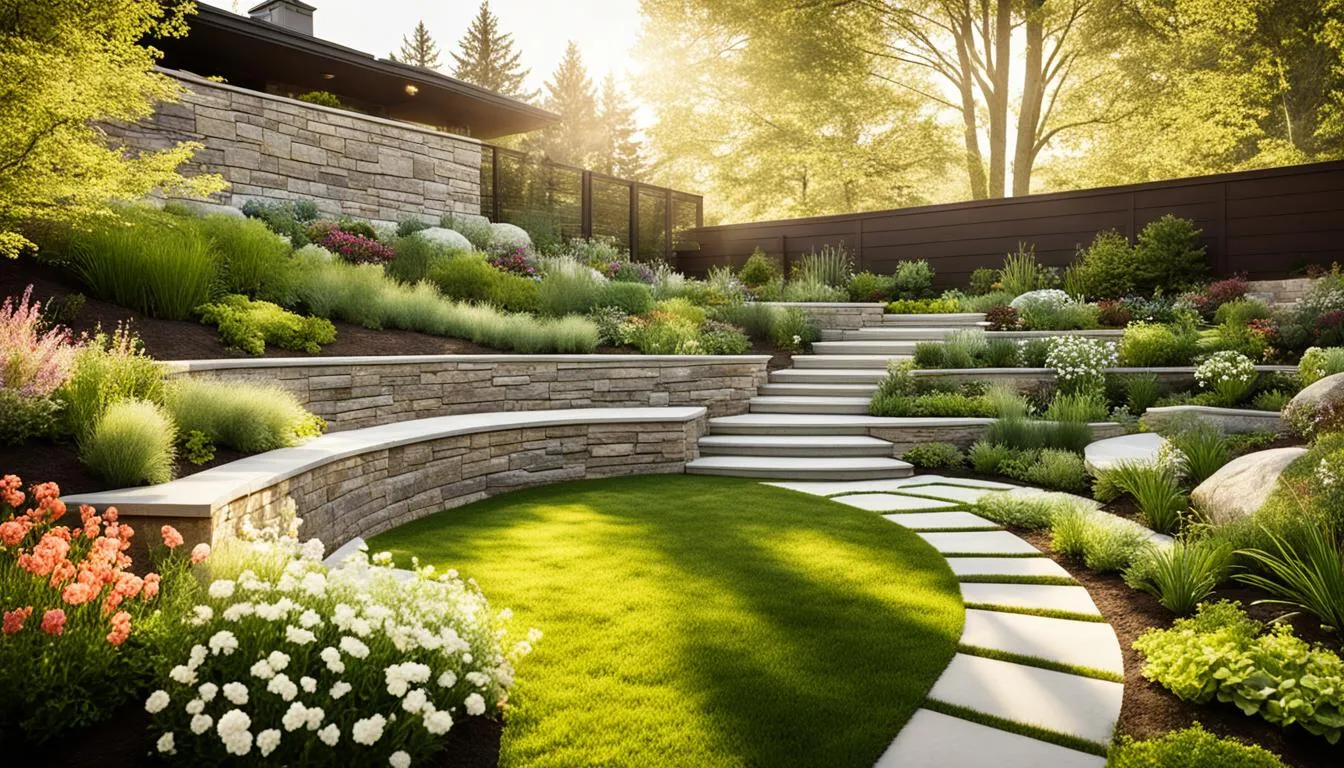
Segmental block walls are a favorite for good reason. They fit many American backyards, come in plenty of textures, and allow curves, tiers, steps, and built-in corners without needing poured forms. For moderate slopes, they often strike a practical balance between strength, cost, and appearance.
These systems depend on proper base prep and setback. Each course usually leans slightly into the slope, which helps the wall resist soil pressure. Homeowners sometimes miss that detail because the finished face looks simple. The hidden geometry does a lot of the work.
A good use case is a split-level backyard in North Carolina where the homeowner wants a flat play area above a small lower patio. Segmental block walls can create clean terraces without making the yard feel boxed in. The wall becomes part of the layout, not a barrier dropped into it.
Natural stone and boulder walls for yards that should feel settled
Natural stone can make a retaining wall feel like it has always belonged there. Fieldstone, limestone, granite, and large boulders all carry a grounded look that works well near gardens, wooded lots, and rustic patios. The appeal is not polish. It is permanence with character.
Stone walls require careful placement because irregular shapes do not forgive sloppy work. A dry-stacked wall needs skill, proper batter, and enough mass to resist movement. Mortared stone can look refined, but mortar does not solve drainage problems by itself. Water still needs a path.
A boulder wall can be a strong choice on wide rural lots or mountain properties where machine access is easy. On a tight city lot, delivery and placement may make it expensive fast. The surprise here is that the stone itself may not be the biggest cost. Access, equipment, and labor often drive the final number.
How Retaining Wall Options Affect Erosion, Soil Pressure, and Maintenance
A wall does not end erosion by standing in front of soil. It works only when the full system controls water, load, and movement. This is where many attractive walls lose the fight. They solve the surface view while ignoring the pressure building behind them.
How erosion control depends on the wall’s hidden layers
Erosion control starts behind the wall, not at the face. Soil needs to stay put during storms, but runoff also needs a way to move without carving channels through the yard. Gravel backfill, geotextile fabric, drain outlets, and stable planting can all play a part.
A backyard in Tennessee with a sloped lawn above a fence may lose soil during summer storms. A wall alone can hold the grade, but bare soil above it may still wash down in sheets. Add deep-rooted plants, mulch, and a planned drainage route, and the system starts acting like a landscape instead of a dam.
The hidden layer most homeowners underestimate is filter fabric. It helps keep fine soil from migrating into clean gravel. Once gravel clogs with silt, drainage slows, pressure rises, and the wall starts aging faster. A small hidden detail can decide whether the wall stays calm for years.
Timber retaining walls and when maintenance is worth it
Timber retaining walls still make sense in some yards. They bring a warmer look, often cost less upfront, and can suit casual landscapes where concrete or stone would feel too hard. Railroad-tie style walls had their era, but modern homeowners should be careful about old treated materials and local rules.
Pressure-treated landscape timbers can work for low walls, raised beds, and informal terraces. They are easier to cut and install than heavy block or stone. The tradeoff is lifespan. Wood lives in contact with soil and moisture, so it asks for inspection, drainage, and eventual replacement.
A timber wall near a vegetable garden deserves extra thought. Many homeowners prefer materials that keep chemical treatment concerns away from edible planting areas. That does not make wood useless. It means the setting matters, and a cheaper wall in the wrong spot may become the expensive choice later.
Building for Permits, Safety, and Long-Term Yard Value
The wall you choose has to satisfy more than your eye. It has to satisfy gravity, water, local rules, and the future buyer who may look at the yard with suspicion. A well-built wall can add usable space and confidence. A questionable one can make a backyard feel like a liability.
When engineering and local rules should guide the project
Many U.S. cities and counties require permits or engineering once a retaining wall reaches a certain height, supports a surcharge, sits near a property line, or affects drainage. The exact rule depends on your local building office, so guessing is a poor plan. A wall beside a driveway, pool, deck, or neighbor’s yard carries more risk than a short planting wall.
This is where homeowners often get uncomfortable because engineering sounds expensive. Yet a stamped plan can save money by preventing overbuilding in one area and underbuilding in another. It can also protect you during resale, insurance questions, or neighbor disputes over runoff.
A smart first step is to photograph the slope after rain. Look for pooling, channels, soft soil, and runoff direction. Then check local requirements before pricing materials. That order keeps the project honest. It also prevents the classic mistake of buying block before knowing whether the wall needs reinforcement.
How to choose a wall that supports the way you live outside
A retaining wall should earn its footprint. It may create a grill terrace, frame a fire pit, protect a basement walkout, hold a garden bed, or carve out a flat lawn where kids can play. The right design starts with how the backyard will be used, then works backward to structure.
For a small New Jersey yard, a single tall wall may feel harsh and make the space seem narrow. Two lower terraces with steps and planting pockets may cost more in layout work but feel better every day. For a Texas backyard with a wide slope, a long block wall with a seat-height cap may turn wasted grade into a social edge.
The best backyard retaining wall is the one you stop noticing for the right reasons. It keeps soil where it belongs, lets water leave without drama, and makes the yard easier to live in. Before you commit, walk the slope after a storm, mark the places where water moves, check local rules, and price the full system instead of the visible face alone. Build for the land first, and the finished yard will feel less like a repair and more like a decision that finally made sense.
Frequently Asked Questions
What is the best retaining wall for a sloped backyard?
Segmental concrete block works well for many sloped backyards because it handles curves, terraces, and moderate height changes with a clean finished look. Steeper slopes, poor soil, or walls near structures may need engineered block, poured concrete, stone, or reinforced systems.
How do I stop erosion behind a retaining wall?
Use clean gravel backfill, filter fabric, a perforated drain pipe, and a safe outlet for water. Bare soil above the wall should also be planted or mulched so rain does not keep washing dirt toward the wall face.
Are timber retaining walls good for backyard slopes?
Timber walls can work for low, informal backyard slopes where budget and warm appearance matter. They need strong drainage and periodic inspection because wood breaks down faster than concrete, block, or stone when it stays near damp soil.
Do I need drainage behind a small retaining wall?
Most small retaining walls still benefit from drainage because water pressure can build even behind short walls. Gravel backfill and a simple outlet may prevent leaning, soil stains, frost movement, and soggy planting beds.
How tall can a backyard retaining wall be without a permit?
Permit rules vary by city, county, and state. Many areas start asking for permits or engineering around certain height limits, especially near property lines, driveways, buildings, or drainage paths. Always check your local building department before work begins.
What is the cheapest retaining wall option for a backyard?
Treated timber is often cheaper upfront for low walls, while basic concrete blocks can be cost-effective for longer service life. The cheapest choice changes once drainage, excavation, access, disposal, and future maintenance are included.
Can plants help with slope stabilization around a retaining wall?
Plants can help hold surface soil, slow runoff, and soften the wall’s appearance. Deep-rooted grasses, shrubs, and groundcovers work better than shallow decorative plants. They support the system, but they cannot replace proper wall structure or drainage.
How long should a backyard retaining wall last?
Lifespan depends on material, drainage, soil, climate, and installation quality. Concrete block and stone walls can last decades when built correctly. Timber usually has a shorter life, especially in wet regions or areas with poor drainage.