Outdoor Kitchen Countertop Materials That Withstand Weather Extremes
A backyard kitchen looks easy until the first summer heat wave, winter freeze, or wind-driven storm starts testing every surface. Many homeowners spend money on appliances and seating first, then treat the counter like a style choice, which is where trouble begins. The right Countertop Materials can handle direct sun, greasy cookouts, rain, snow, pollen, and the occasional dropped cast-iron pan without turning your outdoor space into a repair project. For homeowners comparing outdoor living and home improvement ideas, the smartest choice is not always the flashiest slab in the showroom. It is the surface that fits your climate, your cooking habits, and the amount of maintenance you will honestly do. A countertop in Phoenix faces a different enemy than one in coastal Maine or humid Florida. That is why outdoor kitchen planning needs a weather-first mindset from the start, not after the first crack, stain, or faded patch shows up.
Why Outdoor Surfaces Fail Faster Than Indoor Counters
Indoor counters live a sheltered life. Outdoor counters take abuse from every direction, and the damage often starts before anyone notices it. Sun dries out sealers, freeze-thaw cycles push tiny cracks wider, and moisture sneaks into edges where installers rushed the finish. A material that looks perfect under showroom lights may act completely different after one rough season outside.
How Sun, Rain, and Freeze Cycles Attack the Surface
Direct sunlight is not gentle on stone, concrete, tile, or engineered products. Heat expands the surface during the day, then cooler night air pulls it back. That constant movement can stress seams, weaken sealers, and expose weak spots around sinks, grills, and unsupported overhangs.
Rain adds another layer of trouble because water always searches for the smallest opening. In northern states, that water can freeze and expand inside hairline gaps. A tiny flaw in October can become a visible crack by March, especially on patios where snow piles against cabinetry and counters for weeks.
Why Indoor Favorites Often Disappoint Outside
Some indoor favorites struggle outdoors because they were never built for harsh exposure. Laminate can swell when moisture reaches the core. Many quartz products can discolor under strong UV rays because the resins react to sunlight over time. Certain polished stones also become slippery when wet, which matters near prep zones and serving areas.
The mistake is not choosing a “bad” product. The mistake is choosing a product for the wrong setting. A beautiful kitchen island surface may fail outside because outdoor kitchens are closer to small construction projects than simple decorating upgrades.
Choosing Countertop Materials by Climate, Not Trend
Climate should lead the decision before color, price, or edge style. A homeowner in Arizona needs UV stability and heat tolerance. Someone in Michigan needs freeze resistance and tight installation details. A family near the Gulf Coast needs a surface that can handle humidity, salt air, and heavy rain without constant babysitting.
Best Outdoor Countertop Options for Hot, Sunny Regions
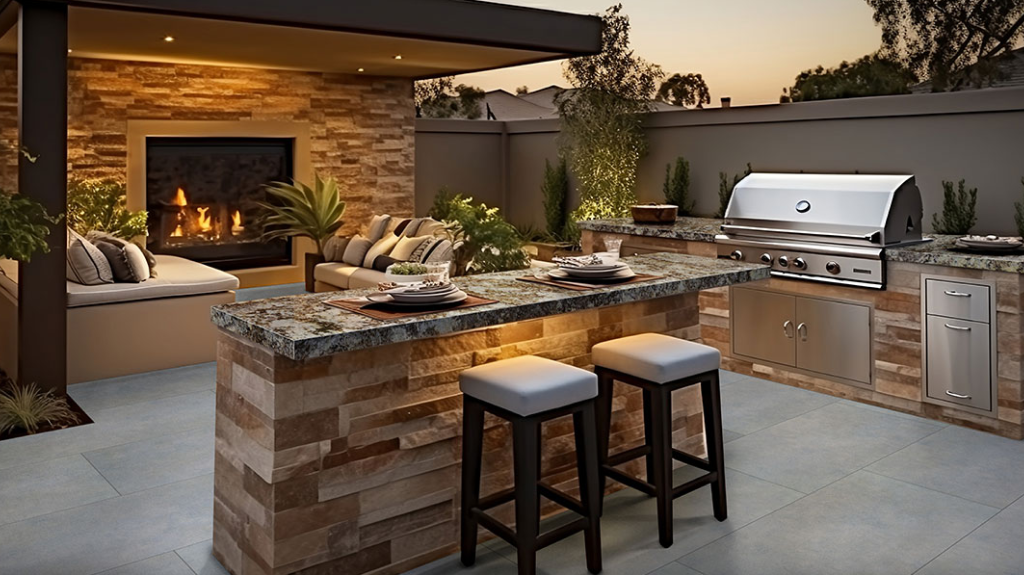
Granite remains one of the strongest outdoor countertop options for sunny areas because dense varieties can handle heat, sun, and daily use with fewer surprises. A honed or leathered finish often works better than a high polish because it hides dust, fingerprints, and minor surface wear.
Concrete can also perform well in dry, hot places when mixed and sealed correctly. The catch is workmanship. Poor concrete cracks, stains, and chips fast. Good concrete looks custom and grounded, especially around built-in grills, but it needs a skilled installer who understands outdoor movement and drainage.
Weather-Resistant Surfaces for Cold and Wet Areas
Porcelain slabs have become one of the strongest weather-resistant surfaces for homeowners who want low upkeep. They resist UV fading, moisture, stains, and heat better than many traditional choices. The material is thin but tough, which means installation skill matters more than thickness alone.
Soapstone also deserves attention in colder climates because it does not absorb much water. It darkens over time, scratches more easily than granite, and develops a lived-in look. That soft aging bothers some people, but for others it feels honest and warm beside wood, brick, or matte black outdoor cabinetry.
Matching Material Strength to Real Cooking Habits
A counter that survives weather still has to work for the way you cook. Some homeowners use an outdoor kitchen for burgers twice a month. Others prep seafood, roll pizza dough, slice fruit for parties, and set hot trays down without thinking. The best surface is the one that forgives your normal behavior.
Heat-Resistant Countertops Near Grills and Pizza Ovens
Heat-resistant countertops matter most around grills, smokers, griddles, and pizza ovens because outdoor cooking zones get messy fast. Granite, porcelain, soapstone, and properly made concrete can handle heat better than many resin-heavy products. Still, direct heat from cookware can shock some surfaces, so trivets and landing zones remain smart.
A built-in pizza oven changes the whole layout. You need landing space for hot peels, flour, sauce, and finished pies. In that setup, porcelain or dense granite often makes more sense than a porous surface that stains every time tomato sauce spills during a crowded Saturday night.
Outdoor Kitchen Design Choices That Protect the Counter
Good outdoor kitchen design protects the counter before damage starts. Slight slopes help water move away from seams. Covered areas reduce UV exposure. Proper cabinet bases keep the slab supported, especially around sinks, refrigerators, and grill cutouts where weak framing can create stress points.
Overhangs need careful planning too. A long bar ledge looks great, but unsupported stone can crack when guests lean on it. In many cases, steel brackets or corbels are cheaper than repairing a broken slab after one party gets a little too relaxed.
Maintenance Reality: What You Will Actually Keep Up With
Every outdoor counter needs some care, but the workload changes a lot by material. The honest question is not “Can this be maintained?” It is “Will you maintain it?” Busy families, rental properties, and vacation homes usually need lower-maintenance choices because small chores get skipped when life gets full.
Low-Maintenance Outdoor Countertop Options for Busy Homes
Porcelain ranks high among low-maintenance outdoor countertop options because it does not need sealing and resists stains from wine, oil, citrus, and smoke residue. It also handles color stability well, which makes it appealing for open-air kitchens with no roof cover.
Granite sits in the middle. Many slabs need sealing, but dense granite can stay manageable with basic cleaning and periodic care. The best move is choosing a pattern that hides crumbs, water spots, and dust instead of chasing a perfect white surface that shows every mark.
Weather-Resistant Surfaces Still Need Smart Cleaning
Even weather-resistant surfaces can suffer when homeowners use harsh cleaners, wire brushes, or acidic products in the wrong place. Outdoor grime feels tougher than indoor mess, but stronger chemicals are not always the answer. Mild soap, soft cloths, and quick spill cleanup prevent most long-term problems.
Sealants deserve respect too. Concrete and many natural stones need the right outdoor-grade sealer, not a random leftover product from the garage. A poor sealer can yellow, peel, or trap moisture, which makes the counter look worse than if you had done nothing.
Balancing Style, Budget, and Long-Term Value
A smart outdoor counter should look good without demanding constant apology. The goal is not to pick the most expensive surface. The goal is to pick the surface that keeps its shape, color, and usefulness long after the first season of cookouts has passed. Cheap choices can become expensive when replacement, labor, and downtime enter the picture.
When Premium Materials Are Worth the Extra Cost
Premium materials make sense when the kitchen is exposed, used often, or tied to a larger patio investment. Porcelain slabs, dense granite, and quality soapstone cost more upfront, but they can protect the whole project from early failure. That matters when cabinets, appliances, plumbing, and lighting all depend on a stable counter layout.
The counter is also one of the first things guests touch. A wobbly, stained, or cracked surface makes the whole kitchen feel unfinished, even if the grill is expensive. A strong surface quietly raises the value of everything around it.
When Budget Materials Can Still Work Outdoors
Budget choices can work when the space is covered, seasonal, or lightly used. Tile may perform well in mild climates if the installer uses outdoor-rated materials, tight grout work, and proper backing. The weak link is usually not the tile itself. It is water getting beneath it.
Concrete can also stay budget-friendly when the design is simple. Fancy pigments, complex shapes, and custom edges raise the price fast. A clean, well-poured slab with a practical finish often beats an overdesigned surface that looks tired after one year.
Installation Details That Decide Whether the Counter Lasts
Material gets most of the attention, but installation decides the outcome. A strong slab can fail if the base shifts, water pools at seams, or cutouts are handled poorly. Outdoor kitchens need tradespeople who understand weather, not only indoor remodeling habits carried onto a patio.
Drainage, Slope, and Support Matter More Than People Think
Drainage is the quiet hero of outdoor counters. Water should never sit around sink edges, grill trim, or backsplash joints. A slight slope can save years of trouble, yet many homeowners reject it because they want the counter to look perfectly flat. Flat is not always better outside.
Support matters at every inch. Heavy stone needs a stable base that will not twist with soil movement, frost heave, or settling pavers. In states with hard winters, the patio base and counter support system deserve as much planning as the visible finish.
Seams, Edges, and Cutouts Need Outdoor Thinking
Seams should be placed where water and heat create the least stress. A seam beside a grill or sink may look harmless at install, but that is where expansion, moisture, grease, and cleaning pressure all meet. Bad seam placement turns normal use into a slow failure point.
Edges also need a practical mindset. Sharp, polished edges chip easier in active spaces where kids, trays, coolers, and tools move around. A slightly eased edge may not feel dramatic in a sample room, but outside, it often ages better and feels safer.
The Best Choice Is the One That Fits Your Yard
Outdoor kitchens are personal because every yard has its own weather pattern, shade pattern, and hosting rhythm. The right decision comes from matching the material to the place instead of copying a photo from someone else’s patio. A mountain cabin, a Texas pool deck, and a coastal barbecue station should not all use the same answer.
Countertop Materials should earn their spot through durability, maintenance fit, and climate sense before style gets the final vote. Granite, porcelain, soapstone, and well-made concrete all have strong cases, but none of them are magic. The winning surface is the one that fits how you cook, how much weather your yard takes, and how much upkeep you will accept without resentment.
Before you commit, bring samples outside, wet them, heat them in the sun, and view them at different times of day. Then choose the surface that still feels right after the shine of the showroom wears off. Build for the weather you actually have, and your outdoor kitchen will feel dependable long after the first cookout.
Frequently Asked Questions
What is the best countertop for an outdoor kitchen in hot weather?
Granite and porcelain usually perform best in hot, sunny areas. Granite handles heat well, while porcelain resists UV fading and stains. The final choice depends on your budget, shade coverage, and whether you want a natural stone look or a cleaner modern surface.
Are quartz countertops good for outdoor kitchens?
Quartz is usually not the best choice outdoors because many products contain resins that can discolor under direct sunlight. Some manufacturers offer outdoor-rated options, but standard indoor quartz should stay inside unless the brand clearly approves exterior use.
What outdoor kitchen countertop needs the least maintenance?
Porcelain often needs the least maintenance because it resists stains, UV damage, moisture, and heat without sealing. It still needs careful installation because thin slabs can chip at edges when handled poorly or placed on weak supports.
Is granite better than concrete for outdoor counters?
Granite is usually easier to maintain and more predictable in harsh weather. Concrete offers a custom look, but it depends heavily on the mix, reinforcement, finish, and sealer. Poor concrete work can crack or stain sooner than homeowners expect.
Can outdoor countertops crack in winter?
Yes, outdoor counters can crack in winter when water enters small gaps and freezes. Freeze-thaw damage is more likely when the surface is porous, poorly sealed, badly supported, or installed without proper drainage around seams and cutouts.
What countertop works best near an outdoor grill?
Granite, porcelain, soapstone, and properly sealed concrete work well near grills. Heat resistance matters, but layout matters too. Leave enough landing space beside the grill so hot trays, tools, and food do not crowd one fragile corner.
Do outdoor kitchen counters need to be sealed?
Natural stone and concrete often need sealing, while porcelain usually does not. Sealing needs depend on the material’s porosity, finish, and exposure level. Always use an outdoor-rated sealer and follow the manufacturer’s schedule instead of guessing.
How do I choose an outdoor countertop for a coastal home?
Choose a surface that resists moisture, salt air, and UV exposure. Porcelain and dense granite are strong choices for coastal homes. Avoid materials that absorb water easily, and make sure the installer uses outdoor-safe adhesives, supports, and seam treatments.