Best Ways to Upgrade Exterior Spaces with Elegance
A home starts speaking before anyone opens the front door. The path, porch, lighting, walls, plants, seating, and even the silence between them all tell visitors whether the place feels cared for or neglected. When you upgrade exterior spaces with intention, the result is not loud luxury; it is quiet confidence. The outside of a home should feel composed, useful, and personal, not dressed up for a photo and uncomfortable in daily life.
Elegance begins when every outdoor choice has a reason. A better entry path can guide movement. Softer lighting can make evenings feel safer and warmer. Durable furniture can turn an unused patio into a place people choose over the living room. Even homeowners who enjoy design inspiration from a trusted publishing network should still filter ideas through their own climate, routine, budget, and architecture. Trends fade fast outside because weather tests everything. A good exterior does not chase attention. It earns it slowly, every time someone walks up, sits down, or pauses to look twice.
Exterior Spaces That Feel Elegant Start with Structure
A polished outdoor area rarely begins with decoration. It starts with bones: clear routes, balanced sightlines, practical zones, and materials that make the home feel settled. Many people try to fix a flat exterior by adding planters, lanterns, or furniture, but accessories cannot rescue a confused layout. Structure does the heavy lifting. Once the shape of the space feels right, every smaller choice becomes easier and more effective.
How to create better outdoor flow
Movement should feel natural before the space tries to look beautiful. A visitor should understand where to walk without hunting for the front door, stepping through wet grass, or squeezing past furniture. A narrow path lined with low planting can feel more elegant than a wide paved area that leads nowhere with purpose.
Think about the daily routes first. You may walk from driveway to entry, from back door to grill, from patio to garden, or from side gate to trash storage. Those routes deserve clean footing, good lighting, and enough width for real use. A path that looks charming but fails when someone carries groceries is not elegant. It is decoration pretending to be design.
A strong layout also leaves breathing room. Outdoor areas often fail because every corner gets filled. Leave open ground around doors, steps, and seating so the eye can rest. Elegance needs space to land.
Using proportions to make the exterior feel calmer
Scale decides whether an outdoor upgrade feels graceful or awkward. Tiny sconces beside a tall door look nervous. Oversized planters on a small porch feel like they are guarding the entrance. The goal is not to make everything match in size, but to make each piece feel like it belongs to the house.
A simple test helps: stand across the street or at the far end of the yard and look at the whole scene. If one feature shouts before the rest of the home has a chance to speak, it may be too large, too bright, or placed without support. Elegance often comes from restraint, not from adding another statement piece.
Older homes need special care here. A cottage, ranch, townhouse, or modern box each asks for a different rhythm. A deep porch can carry layered furniture and larger pots. A slim entry may need one sculptural planter, a clean mat, and sharp lighting. Good proportion respects the house before it tries to improve it.
Materials and Finishes Shape the Mood More Than Decor
After structure, material choices set the emotional temperature of the exterior. Stone, timber, metal, brick, concrete, gravel, and paint all carry weight before a single cushion appears. This is where many upgrades either mature or fall apart. A beautiful concept can look cheap if the finishes fight each other, while modest materials can feel elevated when they share a clear visual language.
Choosing refined outdoor materials that age well
Outdoor materials should not need constant apology. They must handle sun, rain, dust, insects, wind, and daily wear without losing their dignity after one season. Natural stone, sealed concrete, powder-coated metal, treated timber, clay brick, and quality composite decking all work well when chosen for the right climate and use.
The counterintuitive truth is that perfection ages badly outside. A surface that only looks good when spotless will frustrate you. Slight texture, natural variation, and muted tones hide wear better than glossy finishes. Gravel with a firm edging, honed stone with soft color movement, or timber that can weather evenly often feels richer over time than anything too polished.
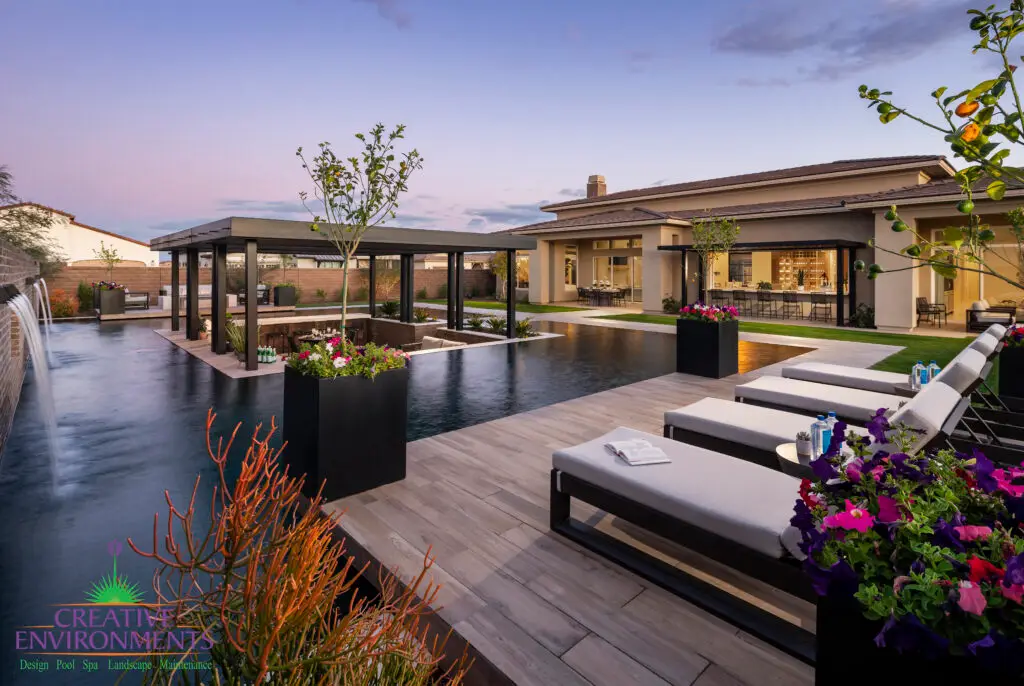
A real example makes this clear. A back terrace with warm stone pavers, black metal chairs, and two weathered timber benches can look collected and calm for years. Replace those with shiny tile, thin plastic furniture, and bright mixed metals, and the same space feels temporary by the end of summer.
How outdoor color choices create quiet elegance
Exterior color should support the architecture, not compete with it. Paint, trim, doors, planters, furniture, and fabric all need a shared direction. That does not mean everything must be beige, gray, or white. It means every color must understand its job.
A dark front door can give a pale home more weight. Warm taupe trim can soften brick. Deep green planters can connect a porch to surrounding landscaping. The best color choices often look calm in daylight and richer in evening light, which matters because outdoor spaces change hour by hour.
Avoid building the whole look around one trendy shade. Outdoor color lives under changing skies, next to plants, and against hard surfaces. A color that looks stylish in a showroom can turn harsh against concrete or washed out beside strong sunlight. Test samples outside for several days before committing. The weather has opinions.
Landscape, Lighting, and Texture Bring the Space to Life
A structured exterior with strong materials still needs softness. Plants, shadows, light, water, fabric, gravel, bark, and leaf movement stop the space from feeling staged. This layer gives the home a sense of life. Without it, even expensive outdoor upgrades can feel like a hotel entrance: clean, impressive, and strangely empty.
Elegant landscaping ideas that avoid clutter
Planting should frame the home instead of hiding it. Dense shrubs pushed against walls can make an exterior feel heavy, while scattered small pots can make it feel restless. The strongest landscaping usually works in layers: low plants near paths, medium shrubs for shape, and taller elements placed where height helps the architecture.
Repetition matters more than variety. Three matching planters with one strong plant choice often look better than ten pots filled with different colors. A run of ornamental grasses beside a path can feel more elegant than a flowerbed packed with competing blooms. Restraint gives plants room to show their form.
Seasonal planning also separates good landscaping from quick decoration. Choose a mix that offers structure when flowers disappear. Evergreens, clipped shrubs, textured grasses, and plants with interesting bark or seed heads keep the exterior alive when color fades. A garden should not collapse into bare soil for half the year.
Outdoor lighting ideas that make evenings feel intentional
Lighting can either flatter a home or expose every weak choice. Bright floodlights may feel safe, but they often flatten the exterior and make outdoor seating unpleasant. Softer layers work better: path lights for movement, wall lights for entry points, and low accent lighting for trees, steps, or textured walls.
The best lighting hides its effort. You should notice the glow, not the fixture, unless the fixture is meant to be part of the design. Warm light near seating feels inviting, while cooler light can make stone and concrete feel cold. Place lights where people move and gather, not only where the house looks good from the street.
One useful trick is to light vertical surfaces. A softly lit wall, tree trunk, or fence gives the eye a boundary at night and makes the space feel larger. A patio with only overhead light can feel exposed. Add side lighting and the mood changes at once.
Furniture, Details, and Daily Comfort Finish the Look
The final layer decides whether the exterior becomes part of life or remains a pretty backdrop. Furniture, storage, shade, textiles, hardware, and small details matter because they touch daily habits. A space can photograph well and still fail if the chair is uncomfortable, the table is too small, or the sun makes the area unusable by late afternoon.
Choosing outdoor furniture that feels elegant and livable
Outdoor furniture should invite use without looking bulky. Slim frames, deep enough seats, washable cushions, and tables sized for actual drinks and plates all matter. A patio with four beautiful chairs and no surface within reach is not designed for people. It is designed for disappointment.
Match furniture to behavior before style. A family that eats outside needs a stable dining setup, not scattered lounge chairs. Someone who reads in the morning may need one perfect chair, a side table, and shade. A couple who hosts neighbors may need flexible seating that moves without scraping or wobbling.
Materials also shape comfort. Metal frames can feel crisp and refined, but they need cushions or thoughtful placement in hot climates. Timber brings warmth, though it needs care. Woven materials soften hard patios, but cheap versions sag fast. Buy fewer pieces with better construction. Outdoor furniture reveals poor quality faster than indoor furniture ever will.
Small exterior decor tips that make the finish feel expensive
Details should look edited, not collected by accident. House numbers, door hardware, mailboxes, mats, pots, cushions, and outdoor art all sit close to the viewer, so weak choices stand out. Replacing faded numbers with a clean, readable style can lift an entry more than another plant ever could.
Texture adds richness when color stays calm. A coir mat, stone planter, linen-look cushion, ribbed ceramic pot, or timber bench can add depth without shouting. This is the quiet work of elegance: making simple things feel considered. The reader may not name each detail, but they will feel the order.
Storage deserves attention too. Hoses, tools, toys, and bins can undo the mood in seconds. A narrow storage bench, screened bin area, or wall-mounted hose reel keeps function from becoming visual noise. The most elegant homes are not free of practical needs. They have simply given those needs a place to go.
Conclusion
A graceful exterior is not built from one dramatic purchase. It comes from decisions that respect the home, the weather, and the way you live. Start with movement, proportion, and layout. Then choose materials that can age without embarrassment, colors that support the architecture, lighting that flatters the evening, and furniture that people will use without thinking twice.
The smartest way to upgrade exterior spaces is to stop treating the outside as a decorative shell. Treat it as the first room of the home. It needs comfort, rhythm, storage, light, and a clear point of view. That mindset changes every choice you make.
Walk outside today and look for the one thing that creates the most visual noise or daily friction. Fix that first, then build outward with patience. Elegance grows best when every upgrade earns its place.
Frequently Asked Questions
What are the best ways to make exterior spaces look elegant?
Start with layout, lighting, and material quality before buying decor. Clear paths, balanced proportions, warm lighting, and durable finishes create the strongest foundation. After that, add plants, furniture, and details in a restrained way so the space feels finished rather than crowded.
How can I upgrade outdoor areas on a small budget?
Focus on high-impact fixes first: clean surfaces, repaint trim, replace old house numbers, improve lighting, add one strong planter, and remove clutter. These changes cost less than major construction but can make the exterior feel sharper, fresher, and more intentional.
Which outdoor lighting ideas work best for curb appeal?
Warm path lights, entry sconces, and soft accent lights near trees or walls usually work best. Avoid harsh floodlights unless security demands them. Layered lighting gives depth, improves safety, and makes the home feel welcoming after sunset.
How do I choose elegant landscaping ideas for a front yard?
Choose fewer plant types and repeat them with purpose. Use low planting near paths, medium shrubs for shape, and taller plants only where height improves balance. Strong landscaping frames the home instead of hiding it behind random greenery.
What outdoor furniture makes a patio look more refined?
Furniture with clean lines, durable materials, and proper scale usually looks most refined. Choose pieces that suit how you live, whether that means dining, lounging, reading, or hosting. Comfort matters because unused furniture always makes a patio feel staged.
How can exterior color choices improve a home’s appearance?
Exterior color can add depth, warmth, and architectural clarity. A strong door color, balanced trim, and coordinated planters can make the home feel more composed. Always test colors outside because sunlight, shade, brick, stone, and plants change how paint appears.
What mistakes make outdoor spaces look cheap?
Too many small decorations, mismatched finishes, harsh lighting, weak furniture, and visible clutter make outdoor areas look careless. Cheapness often comes from confusion, not price. A simple space with fewer better choices usually feels more expensive.
How often should I refresh exterior decor and outdoor finishes?
Review the exterior at least twice a year, ideally before warm and cold seasons. Clean surfaces, repair damage, refresh cushions, trim planting, and check lighting. Bigger updates can happen less often, but small maintenance keeps the whole space looking cared for.