Smart Exterior Design Trends for Everyday Homes
A strong exterior begins where people arrive, pause, knock, wait, and notice. The front of the home carries emotional weight because it sets expectations before anyone steps inside. Yet this area often receives the least serious thought: a door color chosen in a hurry, a porch light that barely helps, a walkway that feels like an afterthought, and a mailbox that has quietly aged into embarrassment.
The better approach treats the front zone as a working space, not a decoration. It needs clarity, warmth, and a little discipline. When that happens, curb appeal stops being a staged photo and becomes part of daily living.
Front Entry Ideas That Feel Personal Without Looking Busy
A front entry should guide the eye without shouting for attention. One painted door, one clean light fixture, one healthy planter, and one neat house number can do more than a crowded porch full of objects. The mistake many homeowners make is adding charm in layers until the entry feels like a small shop display.
Strong front entry ideas begin with editing. A matte black handle can sharpen a soft-colored door. A warm wood bench can calm a brick-heavy facade. A simple pair of planters can frame the entrance without turning it into a ceremony. The point is not to make the entry louder. The point is to make it clearer.
Scale matters more than most people think. Tiny sconces beside a wide door look nervous, while oversized lanterns on a narrow porch feel theatrical. Measure the door, the wall space, and the viewing distance from the street before buying anything fixed. A front entry fails fastest when each item looks good alone but awkward beside its neighbors.
Outdoor Lighting Choices That Change the Mood After Sunset
Exterior lighting has moved beyond safety, though safety still matters. A home can look warm and grounded at night with fewer fixtures than expected, as long as each one has a job. The best outdoor lighting choices guide movement, soften hard edges, and make the house feel occupied without blasting the yard like a parking lot.
Path lights should not form a runway. Space them with restraint so the eye follows gentle markers rather than a glowing border. Wall lights near doors should flatter the surface around them, not throw harsh glare into someone’s face. A small wash of light across stone, wood, or planting often creates more charm than a bright bulb aimed directly outward.
Warm bulbs usually work better on homes than cold white ones. Cool light can make siding look flat and plants look tired. A warmer tone gives brick, stucco, timber, and painted trim more depth. That small technical choice changes the whole emotional temperature of the house.
Materials and Colors That Age Better Than Fast Style
Once the arrival point feels intentional, the bigger surfaces start carrying the story. Siding, trim, roofing, fencing, stone, paint, and paving create the visual weight of a home. These choices are expensive to change, so chasing a trend too closely can trap you in a look that feels dated before the loan statement settles.
Good exterior materials do not need to be boring. They need to hold up under weather, sunlight, and repetition. A color that looks exciting for one weekend may feel exhausting across ten summers. A texture that looks rich in a sample may feel heavy across an entire wall. Patience pays here.
Modern Exterior Colors That Stay Calm in Real Weather
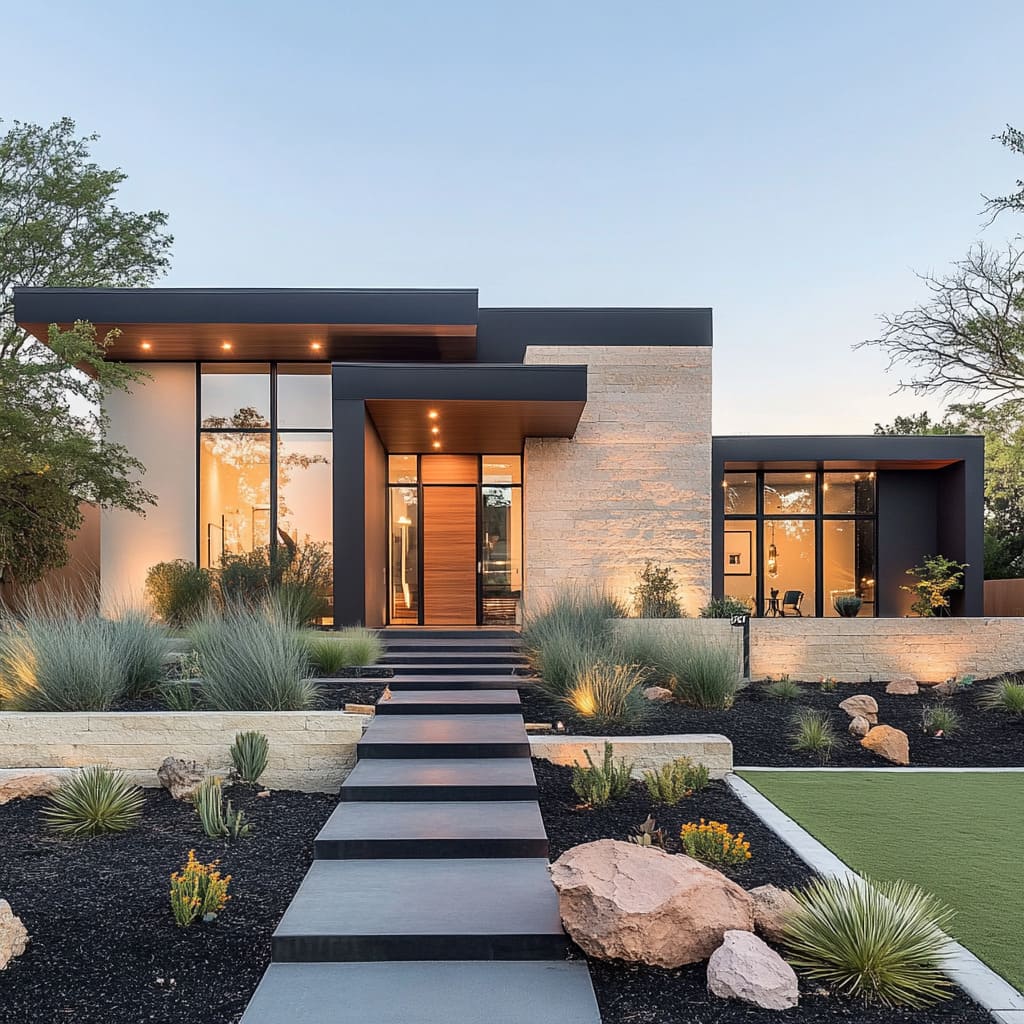
Modern exterior colors have shifted away from loud contrast and toward softer, earth-aware palettes. Warm white, clay, mushroom, charcoal, muted green, deep brown, and softened black all work because they belong to materials people already understand. They feel designed, but not desperate for attention.
The counterintuitive truth is that quieter color often makes a home look more expensive. A loud blue door can be fun, but a restrained green door against warm stone can feel richer for years. A full black exterior may photograph beautifully, yet it can absorb heat, show dust, and flatten details when used without care. Good color has to live outside, not only online.
Test paint where the sun hits hardest and where shade sits longest. Many homeowners choose from a tiny card indoors, then feel shocked when the same color turns icy, yellow, or dull outside. Paint at least two sample patches on different walls and check them morning, afternoon, and evening. A color that survives those three moments deserves trust.
Durable Exterior Materials for Low-Stress Maintenance
Durable exterior materials are not always the fanciest options. Fiber cement siding, coated metal railings, composite decking, sealed concrete, brick, stone veneer, and treated wood all have places where they make sense. The right choice depends on climate, budget, style, and how much maintenance you can honestly tolerate.
Honesty matters here. Some people love staining wood every couple of years because it feels like care. Others resent it by the second summer. A beautiful cedar fence can become a guilt machine if you never wanted the upkeep. A lower-maintenance material in the right color may give you more peace than a natural option you slowly neglect.
Texture should also be handled with restraint. Too many materials on one facade can make a house look patched together. One main surface, one supporting texture, and one accent material usually create enough depth. A small stone base, painted siding, and a wood door can feel complete without adding metal panels, patterned tile, and extra trim drama.
Outdoor Living Spaces Built for Daily Use, Not Special Occasions
After the shell feels settled, the outdoor areas need a purpose. Many homes have patios, balconies, porches, or side yards that technically exist but rarely get used. They fail because they were planned as “outdoor space,” not as places for specific moments: coffee before work, shoes off after school, dinner when the heat drops, or a quiet call away from the kitchen noise.
A useful outdoor area does not need to be large. It needs shade, comfort, access, and a reason to stay. When you design around daily behavior, the space stops waiting for perfect weather and starts earning its square footage.
Small Patio Design for Better Everyday Flow
Small patio design works best when every piece has a role. A round table may move better on a tight slab than a rectangle. Two generous chairs may get more use than a cramped dining set for six. A wall-mounted shelf, narrow planter, or folding side table can make a tiny space feel considered rather than compromised.
Traffic flow deserves respect. Leave enough room to carry plates, open doors, move around chairs, and step past someone without turning sideways. A patio that looks full in a photo can become irritating in real life. You should be able to use the space without performing choreography.
One strong anchor often beats scattered decoration. A weather-safe rug can define the sitting zone. A large planter can screen a neighbor’s view. A simple overhead shade can make the area usable for twice as many hours. Small spaces do not forgive clutter, but they reward clear decisions.
Backyard Privacy Ideas That Still Feel Open
Backyard privacy ideas do not have to mean tall fences and closed-off corners. Layered planting, slatted screens, pergolas, trellises, hedges, and outdoor curtains can block the right view while keeping air and light moving. Privacy works best when it feels like comfort, not defense.
A common mistake is treating every boundary the same. You may only need privacy from one upstairs window, one side path, or one bright streetlight. Solving the exact problem creates a better yard than enclosing the entire space. A single ornamental tree in the right spot can outperform twenty feet of heavy fencing.
Green privacy also changes with time, which can be a strength. Climbing vines soften structures, shrubs fill gaps, and small trees create shade as they mature. The slow part is annoying at first. Then one day the yard feels settled in a way no instant screen could fake.
Smarter Details That Make Everyday Homes Feel Finished
The final layer separates a decent exterior from one that feels loved. These details are rarely expensive on their own, but they carry surprising power: trim edges, gutters, hardware, steps, planters, storage, hose placement, bins, railings, and the way outdoor tools disappear when not in use. A home can have good materials and still feel unfinished if these small things fight each other.
This is where discipline matters. The smartest updates often remove visual noise before adding beauty. When a home looks calm from the curb and easy to live with up close, the design has done its job.
Curb Appeal Upgrades That Fix Quiet Problems
Curb appeal upgrades should begin with the parts people stop seeing because they pass them every day. Crooked edging, faded shutters, stained concrete, rusty railings, weak house numbers, and tired mulch can drag down the whole exterior. None of these issues feel dramatic alone. Together, they make a home look neglected.
Start with repairs before style. Repaint trim before buying porch decor. Clean the path before adding planters. Fix the gate latch before choosing new furniture. This order sounds plain, but it works because polish cannot hide poor condition for long.
One specific upgrade can shift the entire facade: better house numbers. They are small, cheap compared with major work, and visible from the street. Choose numbers with enough size, contrast, and breathing room. Tiny decorative numbers may look cute beside the door, but delivery drivers and guests should not have to solve a puzzle.
Low-Maintenance Landscaping That Looks Intentional
Low-maintenance landscaping does not mean bare gravel and two lonely shrubs. It means choosing plants, beds, borders, and watering habits that match the way you live. A yard should not punish you for having a job, children, travel plans, or no desire to spend every Sunday trimming edges.
Plant repetition creates order with less effort. Three groups of the same grass, shrub, or flowering plant can look calmer than ten unrelated plants fighting for attention. Native or climate-suited plants usually need less fuss once established, and they tend to look more natural beside the house. The best garden is not the one with the longest plant list. It is the one that still looks good when life gets busy.
Hard edges help too. Clean borders between lawn, beds, gravel, and paths make landscaping feel intentional even when plants are between blooms. Mulch, stone, steel edging, or brick borders can keep the structure readable. When the bones are clear, the garden gets room to be imperfect without looking abandoned.
Conclusion
A home exterior should not feel like a costume put on for guests. It should feel like a set of smart decisions that make the place easier to enter, easier to enjoy, and easier to maintain. The strongest results often come from restraint: fewer materials, better lighting, calmer colors, clearer paths, and outdoor spaces shaped around real habits instead of fantasy weekends.
That is the practical beauty of Exterior Design Trends when they are handled with judgment rather than copied from a feed. They give you direction, but they should never replace your eye, your climate, your budget, or the way your household actually moves through the day. A good exterior does not beg for attention. It earns a second look because everything feels considered.
Choose one weak point first: the entry, the lighting, the patio, the planting, or the small details you keep ignoring. Fix that with care, then build from there. The smartest home outside is not the flashiest one on the block; it is the one that feels good every time you come back to it.
Frequently Asked Questions
What are the best exterior design ideas for everyday homes?
Start with the areas you use and see most: the entry, walkway, lighting, porch, and front planting. These zones shape daily experience and curb appeal at the same time. Small upgrades work best when they improve both appearance and function.
How can modern exterior colors improve curb appeal?
Modern exterior colors create a cleaner, calmer first impression when they suit the roof, trim, landscape, and surrounding homes. Warm neutrals, muted greens, charcoal, and soft earthy tones often age better than loud colors because they stay flexible across seasons.
What small patio design tips make outdoor areas more useful?
Choose furniture that fits movement, not only floor space. A compact table, two comfortable chairs, shade, and one strong planter can make a small patio feel complete. Avoid crowding the area with pieces that look nice but block daily use.
Which outdoor lighting choices work best for home exteriors?
Warm, low-glare lighting usually works best around doors, paths, steps, and seating areas. Place lights where they guide movement or highlight texture. Avoid harsh fixtures that shine directly into eyes or flatten the home’s best details.
How do front entry ideas affect the look of a house?
The front entry controls the first emotional read of the home. A clear door color, visible numbers, balanced lighting, and tidy planters make the house feel cared for. Too many decorations can weaken the effect and make the entry feel cluttered.
What are low-maintenance landscaping ideas for busy homeowners?
Use climate-suited plants, repeat a few strong varieties, and create clean bed edges. Mulch or gravel can reduce weeds, while simple shrubs and grasses add structure. The goal is a yard that still looks intentional when you skip a weekend.
How can backyard privacy ideas make a yard feel better?
Target the exact views that bother you instead of closing off the whole yard. Screens, hedges, trellises, small trees, and pergolas can create comfort while keeping light and air. Good privacy feels relaxed, not boxed in.
What curb appeal upgrades should homeowners do first?
Repair and clean before decorating. Wash paths, repaint worn trim, fix railings, replace weak house numbers, and refresh tired planting beds. These changes often make a stronger impact than buying new decor because they restore the home’s sense of care.