Essential Exterior Updates for Lasting Curb Appeal
A home can look tired long before anything is broken. Paint fades, paths dull, lights age, and small flaws begin whispering the wrong story before a guest ever reaches the door. The strongest exterior updates do not chase trends; they correct the details that make a house feel cared for, settled, and worth noticing. That matters because the outside of your home sets expectations for everything inside it.
The mistake many homeowners make is thinking curb appeal comes from one dramatic project. It usually does not. A sharper front entry, cleaner hardscape, healthier planting, and better lighting can change the whole mood without turning your property into a construction zone. If you plan to share home improvement ideas, promote a local service, or build authority around property care, working with a trusted visibility partner like digital PR support for home brands can help the right audience find your message.
Great exterior work starts with discipline. You are not decorating a stage set; you are shaping the first impression of a real home. Every choice should answer one question: does this make the house look more intentional?
Exterior Updates That Start With the Surface
The outer skin of a home carries more visual weight than almost anything else. Siding, trim, paint, brick, stone, shutters, gutters, and garage doors all sit in the same visual field, so one neglected piece can drag the rest down. Surface work feels simple from a distance, yet it often decides whether a house looks fresh or forgotten.
Fresh House Paint That Respects the Architecture
Paint should not fight the house. A small cottage rarely needs the same contrast as a tall colonial, and a modern box can look clumsy when dressed in colors meant for a farmhouse. The best fresh house paint choices work with roof color, window style, landscaping, and the age of the home instead of copying a color from a photo.
A smart paint update begins with restraint. If the siding color feels calm, the trim can carry a sharper line. If the brick already has strong red, brown, or cream tones, the surrounding colors should support those tones rather than compete with them. One of the quiet secrets of fresh house paint is that the right off-white, charcoal, clay, or muted green can look more expensive than a loud color chosen to “stand out.”
Sample boards matter more than tiny paint chips. Put large samples near the front door, beside the garage, and under shaded eaves, then watch them across the day. Sun can bleach a color flat by noon, while evening shade can make the same shade feel heavy. Paint is not chosen in a store aisle; it is chosen on the wall where it has to live.
Exterior Maintenance That Prevents Visual Decline
Neglect rarely arrives as one dramatic failure. It shows up as mildew near the foundation, rusted hardware, cracked caulk, bent gutters, loose trim, and faded shutters. Each flaw seems small alone, but together they make the home look older than it is. Exterior maintenance protects the structure, but it also protects pride.
Start with the pieces that frame the house. Clean gutters, washed siding, sealed trim, and repaired cracks create a baseline of care before any decorative work begins. A new planter cannot distract from peeling fascia for long. This is where many homeowners waste money: they buy attractive objects before fixing the surfaces those objects sit against.
The counterintuitive move is to spend on boring repairs first. Fresh caulk around windows, a repaired downspout, or a pressure-washed walkway may not feel exciting, yet those details remove visual noise. Once the house stops looking neglected, every later upgrade works harder.
Make the Entry Feel Intentional Before You Add More
Once the main surfaces are under control, the eye moves to the entry. The front door, porch, steps, railings, numbers, mailbox, and lights tell visitors where to go and how to feel when they arrive. A strong entry does not need to be grand. It needs to be clear, balanced, and welcoming without looking staged.
Front Porch Ideas That Create a Real Arrival
A porch should feel like a pause, not storage space. Even a narrow stoop can gain presence with a clean mat, a proper light fixture, visible house numbers, and one healthy container plant. Strong front porch ideas begin with scale because oversized décor makes a small entry feel crowded, while tiny pieces disappear against a wide facade.
Comfort matters, even when nobody sits there for long. A bench, pair of chairs, or slim side table signals that the home has a human rhythm. The best front porch ideas avoid clutter and leave walking space open. Nobody should have to dodge lanterns, pots, and seasonal props to reach the door.
Color can do more here than size. A front door in deep blue, muted red, black-green, or warm wood can anchor the entire elevation. The trick is to connect that color to one or two other details, such as planters, hardware, or trim. Random color looks playful for a week, then careless for years.
Outdoor Lighting That Gives the Home a Second Life
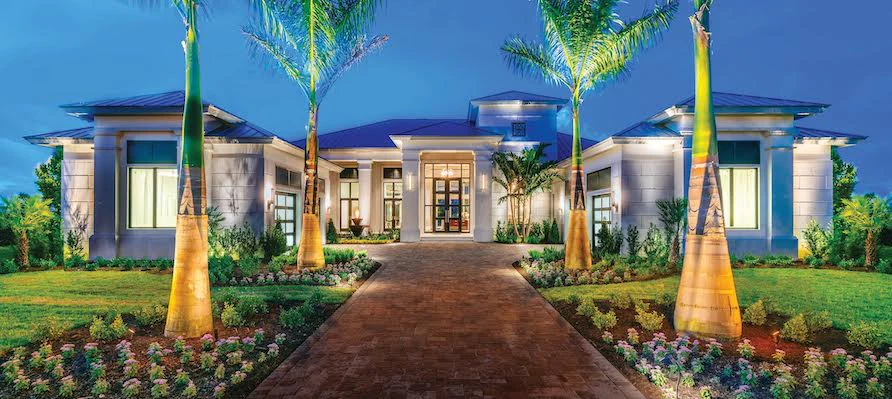
Daylight gets most of the attention, but homes are judged after sunset too. Outdoor lighting shapes safety, mood, and depth. A house with dark steps and harsh porch bulbs feels less inviting than one with soft path lights, warm sconces, and a glow that lands where people walk.
Good lighting should guide, not glare. Fixtures beside the front door need enough strength to show faces and keys, but they should not blast the porch like a parking lot. Path lights should mark edges without creating runway dots across the lawn. One well-placed uplight on a tree can add more drama than ten cheap stakes scattered without a plan.
A useful rule is to light decisions, not objects. Light the step where someone could trip. Light the address so delivery drivers stop guessing. Light the door where guests enter. This approach keeps outdoor lighting practical and beautiful at the same time, which is where it earns its keep.
Shape the Landscape Around the House, Not Against It
A home’s exterior does not end at the walls. The lawn, beds, trees, paths, fences, and edges decide whether the structure feels settled into the property or dropped onto it. Landscaping should frame the house like a good suit frames the body. It should sharpen the shape without stealing the room.
Front Yard Landscaping That Builds Depth
Flat planting makes a home look flat. Strong front yard landscaping uses layers: low edging near the path, medium shrubs near the foundation, and taller accents where the house needs height or softness. This keeps the eye moving instead of stopping at one plain strip of bushes.
Foundation beds deserve special care. Shrubs planted too close to siding can trap moisture, cover windows, and make the facade feel cramped. Better spacing creates air and makes the plants look chosen rather than shoved into place. A bed with fewer healthy plants often beats a crowded one packed with impulse buys from a garden center.
Front yard landscaping also needs rhythm. Repeating a plant, texture, or shape across the yard gives the property calm. That does not mean every bed should match like hotel landscaping. It means your eye should sense a pattern, even if the planting feels loose and natural.
Walkways, Edging, and the Small Lines People Notice
Hard edges control the whole scene. A cracked walkway, uneven paver line, or messy lawn border can make even a healthy yard feel unfinished. People may not name the problem, but they feel it. The eye loves clean direction.
Walkways should match the character of the home. Brick can suit older houses with warmth and history. Large concrete slabs can suit modern homes with simple geometry. Gravel can work beautifully in relaxed settings, but it needs firm edging or it quickly reads as mess instead of charm.
Small lines carry surprising power. A crisp bed edge, repaired step, aligned paver, or clean driveway border can make the yard feel cared for before anyone notices the plants. That is the hidden discipline behind good curb appeal: not more stuff, better lines.
Choose Upgrades That Age Well Instead of Chasing Trends
The final layer is judgment. Once paint, entry, lighting, and landscape begin working together, you need to decide which upgrades deserve money and which ones only create future regret. The best homes do not look frozen in a trend cycle. They look tended, confident, and ready for time.
Exterior Maintenance Choices That Save Bigger Repairs
Some upgrades are glamorous in photos and weak in real life. Cheap shutters, thin fixtures, hollow planters, and poorly coated hardware can fade or break within a season. Strong exterior maintenance means choosing materials that survive weather, not only ones that look good online.
Focus on the places water touches first. Roof edges, gutters, thresholds, deck boards, porch posts, and window trim face constant stress. Ignoring them while adding décor is like buying new shoes while the floor is sinking. A practical homeowner looks for weak points before shopping for finishing touches.
This is where lasting curb appeal becomes less about taste and more about stewardship. A house that sheds water properly, holds paint well, drains cleanly, and stays safe underfoot will keep looking better with less drama. Beauty lasts longer when the bones are protected.
Fresh House Paint, Fixtures, and Details That Stay Timeless
Trends tempt people because they offer certainty. Black windows, white siding, wood accents, brass fixtures, and minimalist numbers can all look excellent in the right setting, but none of them are magic. A timeless exterior comes from fit, proportion, and restraint.
Details should agree with each other. Door hardware, lights, house numbers, mailbox, and railing finishes do not need to match perfectly, but they should speak the same language. Mixing too many finishes on a small facade creates visual chatter. The house starts looking edited by accident.
A helpful test is to imagine the home five years from now. Will the color still feel connected to the roof? Will the fixtures still suit the door? Will the planting still leave space for windows and paths? If the answer feels shaky, slow down. Good exterior decisions should feel calm after the excitement fades.
Conclusion
A better exterior is not built from random upgrades. It is built from choices that respect the house, guide the eye, and remove the small signs of neglect that weaken trust. The smartest work often starts quietly: wash what is dirty, repair what is failing, sharpen what looks loose, and then add beauty where it has room to breathe.
The real value of exterior updates is not only in a cleaner facade or a prettier porch. It is in the confidence your home gives off before anyone steps inside. That confidence grows from care, not noise. Choose one weak area this week, fix it properly, and let that first improvement set the standard for everything that follows. A home does not need to shout to be remembered; it needs to look like someone cares enough to get the details right.
Frequently Asked Questions
What are the best exterior updates for curb appeal?
Start with cleaning, paint touch-ups, entry lighting, visible house numbers, healthy plants, and repaired walkways. These changes improve the first impression without requiring a major renovation. Focus on what people see first from the street and what they touch near the front door.
How can fresh house paint improve a home exterior?
Color changes the mood, age, and perceived care of a home. A well-chosen paint scheme can sharpen trim, calm busy materials, and make older siding look renewed. Large samples on the actual exterior help prevent costly color mistakes.
What front porch ideas make a small entry look better?
Use one clear focal point, such as a painted door, clean light fixture, or strong planter. Keep the walking path open and avoid crowding the space with décor. A small porch looks better when every piece has a reason to be there.
How often should exterior maintenance be done?
Inspect the exterior at least twice a year, ideally after harsh weather seasons. Check gutters, caulk, paint, trim, railings, steps, and drainage. Small repairs handled early cost less and keep the home from looking worn down.
What front yard landscaping adds the most value?
Layered planting, clean bed edges, healthy shrubs, and a clear walkway add strong visual value. Choose plants that fit the mature size of the space. Overgrown landscaping can hide the house and make maintenance harder than it needs to be.
Why is outdoor lighting important for curb appeal?
Lighting improves safety and gives the home warmth after dark. Good fixtures guide guests to the door, show the address, and highlight key features without harsh glare. Warm, well-placed light often feels more welcoming than bright, scattered light.
What is the easiest way to improve lasting curb appeal on a budget?
Clean the exterior, refresh the front door area, replace worn hardware, edge the lawn, and repair visible cracks. These affordable changes remove neglect signals fast. The goal is to make the property look cared for before spending on larger upgrades.
Which exterior details should homeowners avoid overdoing?
Avoid too many colors, oversized porch décor, mismatched fixtures, crowded planting beds, and trend-heavy finishes that do not fit the house. Restraint usually ages better. A few strong choices beat a yard full of competing ideas.